
Contents
Key takeaways
- FOMO in trading is the fear of missing a profitable move, and it pushes traders into positions without analysis or a plan.
- It is driven by loss aversion, herd behavior and overconfidence, and social media makes it worse.
- Common signs include chasing price, oversizing positions, moving stop losses and comparing your results with others.
- A written trading plan, a journal, fixed risk rules and time away from social feeds are the core defenses.
- FOMO never disappears completely; the goal is to manage it so it does not drive your decisions.
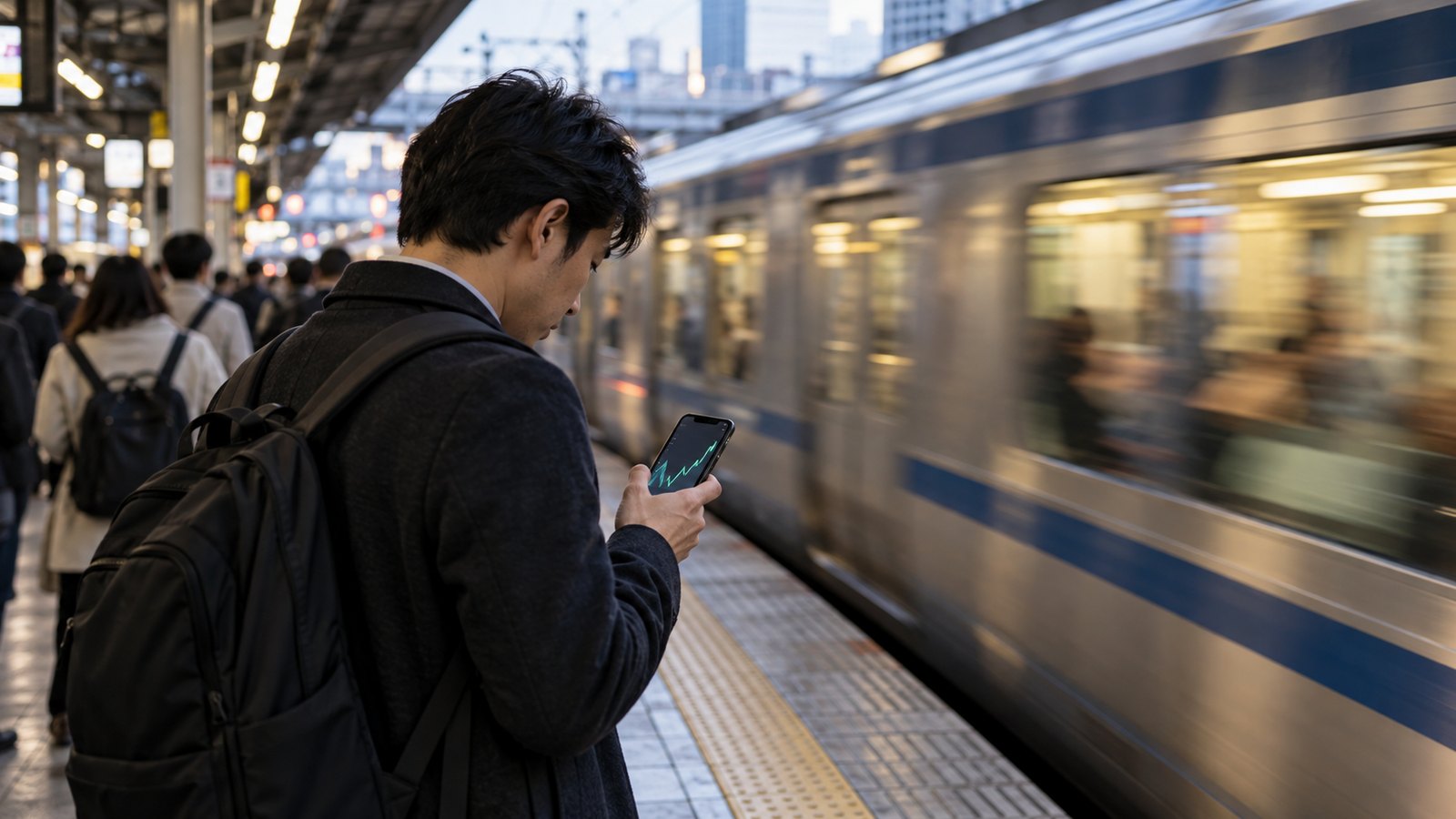
Picture a currency pair or a crypto asset that has moved sharply in the last few hours. Your feed is full of screenshots of large profits. Suddenly you feel that if you do not enter right now, you will miss the opportunity of a lifetime. That is the moment when the fear of missing out takes over and pushes you into a decision that ignores every risk rule you set for yourself.
This article explains what FOMO is in trading, why our brains give in to it, how to recognize it and how to control it with practical steps. If you want your trades to come from a plan and analysis rather than excitement and fear, the sections below are for you. Overcoming impulsive urges is an essential step toward mastering trading psychology and emotion control, ensuring that your capital is deployed only when a genuine statistical edge exists.
What Is FOMO in Trading and How Does It Form?
FOMO stands for “Fear Of Missing Out.” In financial markets, it describes a state in which a trader enters a position out of fear of losing a profitable opportunity, without enough analysis and outside their trading plan. The feeling usually gets stronger when the market makes a fast, loud move and social media fills with profit screenshots and excited messages.
FOMO is not a simple emotion. It is a mix of anxiety, greed, a sense of competition and fear of failure that disrupts decision-making in a fraction of a second. A trader caught by FOMO stops asking “Does this trade fit my strategy?” and starts asking “How fast can I make money?” That change of question is where the path to losses begins.
FOMO vs. Greed in Trading
Greed and FOMO are close but different. Greed is the desire to take more profit from a trade that is already working. FOMO comes from the fear of missing an opportunity that others have already used. In greed, the trader is in profit and wants more. In FOMO, the trader has no profit and enters because they are afraid of falling behind. Both can lead to losses, but their psychological roots and the ways to control them differ.
The Role of Social Media and News in Fueling FOMO
Social platforms such as Twitter, Telegram and Instagram have become the main channel for market news and market emotion. When you see dozens of people posting about their profits on one trade, your brain unconsciously receives the message that you are behind. This is known as the social proof effect, and it is one of the strongest drivers of FOMO in trading.
Why We Enter Trades Afraid of Missing Out: The Psychological Roots
To control FOMO, you first need to understand why the brain is so vulnerable to it. The roots lie in the evolutionary structure of the human brain, which was built for survival, not for trading financial markets.
Loss Aversion in Behavioral Economics
Behavioral economics shows that people naturally fear losses more than they value gains. This is called loss aversion. It makes the fear of missing an opportunity feel as intense as the fear of a real loss. The brain processes a missed opportunity much like an actual loss, and that creates strong psychological pressure.
Herd Behavior and Going Along With the Crowd
Humans are social creatures and tend to align their behavior with the group. In markets, this leads to herd behavior: when everyone is buying, you feel you should buy too. This is especially dangerous in strong bull markets, because the largest number of emotional traders usually enters near the top.
The Illusion of Control and Overconfidence
Many traders become overconfident after a few winning trades and start to believe they can predict every move. This illusion of control makes them more vulnerable to FOMO, because they think that even if they enter late, they will exit in time.
Signs of FOMO in Trading You Need to Recognize
Recognizing the signs of FOMO is the first step to controlling it. If you can spot these signals in yourself, you can stop before entering an emotional trade.
- Entering a trade without checking your trading plan or technical analysis
- Suddenly increasing position size to make up for lost time
- Feeling anxious and restless while watching the chart
- Chasing price and entering at the top or the bottom
- Ignoring your stop loss or moving it repeatedly
- Constantly comparing your profits with other people’s results on social media
- Trading very short timeframes without preparation
- Feeling strong regret after missing a price move
How FOMO Affects Decision-Making and Risk Management
When FOMO takes over, the logical part of the brain, the prefrontal cortex, shuts down, and the emotional part, the amygdala, takes control. As a result, the trader oversizes the position, ignores the stop loss and enters at the worst possible price. Together, these behaviors make risk management useless.
The Hidden Cost of FOMO in a Trading Account
The cost of FOMO is not only lost money. It also includes eroded confidence, higher stress, rushed decisions and, eventually, leaving the market early. Many new traders quit after repeated FOMO experiences, convinced that “this is not for me.”
FOMO Trader vs. Disciplined Trader
To see the difference between emotional and professional behavior, review the table below. It helps you decide which side you are on and what needs to change.
| Feature | Trader affected by FOMO | Disciplined, professional trader |
|---|---|---|
| Trigger for entering a trade | Excitement, news, other people’s profits | Analysis, trading plan, a defined setup |
| Position size | Variable and often too large | Fixed and based on capital management |
| Stop loss | Ignored or moved | Set in advance and respected |
| Reaction to a loss | Revenge trading | Re-analysis and acceptance of the loss |
| Source of decisions | Social media and emotions | Data, charts and a trading journal |
| View of the market | Short-term and opportunistic | Long-term and process-driven |
| Stress level | High and constant | Controlled and manageable |
Practical Ways to Control FOMO in Trading
Controlling FOMO is a skill, not an inborn trait. With practice and discipline, you can manage the feeling and base your trading decisions on logic.
Write a Trading Plan
The first and most important step is a written trading plan that defines entry conditions, exits, position size and stop loss. If your plan says “I only enter when price reaches this support level,” you no longer need to react to market excitement. The plan is your shield against FOMO.
Use a Trading Journal and Record Your Emotions
Recording every trade along with how you felt helps you see your behavioral patterns. If you notice that your biggest losses came from trades entered with FOMO, you will have more motivation to control it.
Set Strict Rules for Size and Risk
Before every trade, decide what percentage of your capital you will risk, for example a maximum of 1 to 2 percent. This rule limits heavy losses even when FOMO shows up. If you are not sure what percentage suits you, use the trading strategy simulator to find the highest risk that keeps drawdown within your tolerance. For the position itself, the position size calculator turns that risk percentage into a concrete lot size.
Step Away From Social Media During Trading Hours
One of the most effective steps is to limit access to social media during your trading sessions. Emotional news and other people’s profit posts are the main fuel for FOMO. Cut the fuel and the fire dies down.
Practice Mindfulness and Emotion Control
Meditation, deep breathing and mindfulness can help you create a gap between a trigger and your reaction in emotional moments. That short gap is often the difference between a considered trade and a rushed decision.
Accept That Opportunities Never Run Out
Financial markets create new opportunities every day. If you missed one move, the next one is on its way. Believing this sharply reduces the psychological pressure of FOMO.
A Practical Checklist to Prevent FOMO Before Every Trade
Before you click buy or sell, go through this checklist. If your answer to any item is “no,” FOMO is probably making the decision for you.
- Does this trade match my trading plan?
- Have I set my stop loss and take profit in advance?
- Does the position size follow my capital management rules?
- Am I calm right now, or emotional?
- If I miss this trade, will another opportunity come?
- Am I deciding based on my own analysis or because of others?
- Can I accept the potential loss on this trade?
Hypothetical Example
Suppose a trader has a $10,000 account and a rule to risk 1 percent, or $100, per trade. A coin has just jumped, and the feed is full of profit posts. The trader feels the pull of FOMO and considers a $2,000 position with a stop loss 10 percent below entry. That stop would risk $200, twice the plan limit. If the trade goes wrong, the loss is $200 instead of $100. Two such emotional trades cost $400, which is 4 percent of the account, while the plan allowed only 2 percent across both. The disciplined version is simple: keep the risk at $100, size the position so the stop distance equals $100 of risk, and skip the trade entirely if the setup is not in the plan. The difference is not the market’s direction; it is whether the rule was followed.
Common Mistakes
- Treating FOMO as a character flaw instead of a manageable emotional pattern.
- Writing a trading plan but never checking it before entry.
- Increasing position size after a missed move to “catch up.”
- Moving the stop loss further away to avoid taking a loss.
- Keeping social media open all day and calling it market research.
- Judging your process by one outcome instead of reviewing a series of trades.
Frequently Asked Questions
What is FOMO in trading and how is it different from normal excitement?
FOMO in trading is the fear of missing a profitable opportunity that pushes a trader to enter without analysis. Unlike normal excitement, it usually comes with anxiety, psychological pressure and comparison with others, and it disrupts logical decision-making.
Why are new traders more prone to FOMO?
New traders are more exposed to FOMO because they lack experience, a clear trading plan and emotion management skills. They are also more influenced by social media and promises of quick profits, so they give in to emotions faster.
Does FOMO only happen in bull markets?
No. FOMO appears in bull markets as fear of missing a price rise, and in bear markets as fear of missing a sell-off or a short. In both cases, the trader enters without analysis because of the fear of falling behind.
What is a quick way to control FOMO in the moment?
The simplest immediate step is to stop and breathe deeply for 30 seconds. Then review your trading checklist and ask whether the trade matches your plan. If the answer is no, skip the trade.
Can FOMO be cured completely?
FOMO is a natural human emotion and does not disappear entirely. With practice, a trading plan, journaling and stronger psychological skills, it can be controlled to a large degree. The goal is not to remove the feeling but to keep it from overriding your trading decisions.
Further Reading
- Trading strategy simulator: drawdown, losing streaks and prop challenge pass odds from a win rate and risk
- Position size calculator
- Pip value calculator
- Prop firm drawdown calculator
- Futures tick value calculator
- Weekly gold outlook and track record
Risk warning: Trading financial markets involves substantial risk of loss and is not suitable for every investor. The content on FundoraTrade is educational only and does not constitute investment advice. FundoraTrade is not a broker. Past performance and hypothetical examples do not guarantee future results. Never risk money you cannot afford to lose, and consider seeking independent advice where appropriate.